

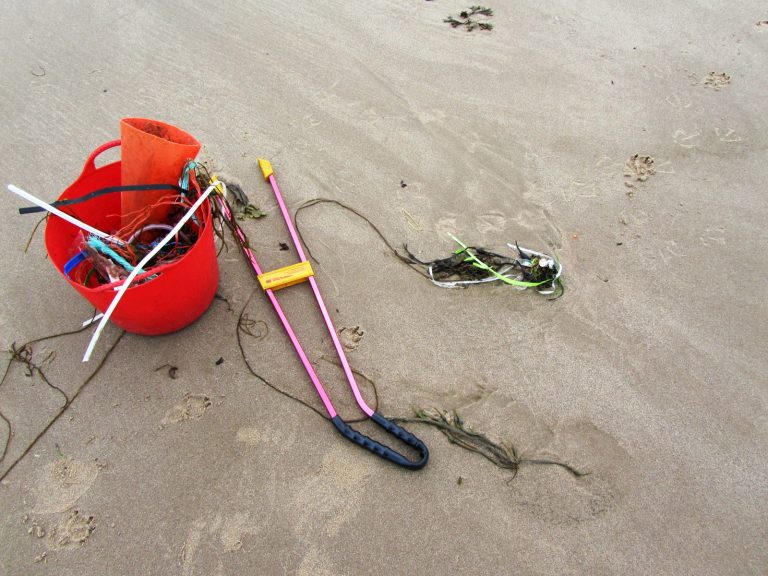
Marine conservation is a huge and complicated subject. But beach care at Lytham is something that anyone can help with – even 5 minutes makes a difference!
Lytham has miles of golden beach and marshy foreshore. It stretches around the coast from nearby St Annes into the estuary of the River Ribble, with views across the water to Southport.
It’s important that we all do our bit to help.
Beach Care at Lytham
Local authorities, utility companies, local community groups and members of the public work together and do their best to protect this natural environment.
Three active Lytham based community groups look after the shoreline of this area.
- Friends of the Estuary look after the Lytham seashore,
- Fairhaven Coastal Care group look after the stretch from Fairhaven to St Annes
- and the St Annes BeachCare group looks after the seafront from the Pier heading northwards.
Winds can be really strong on this coast. So litter dropped on shore gets blown into the water and onto the beaches and river. Some litter is dropped by the general public, some is accidentally windblown. But by any means most of it is washed inland from the sea.
A litter pick collects all manner of material, including the oddest of things like toilet seats, car tyres, and even Christmas trees. By far and away the most common things are drinking straws, bottle tops, the little plastic sticks off cotton buds, sanitary products and disposable lighters. Strangely, different beaches seem to attract their own ‘typical’ types of litter.
FREE Newsletter
FREE Newsletter

Not just unsightly…
Of course beach care and conservation doesn’t start and stop at what the beach looks like. There are practical reasons why it needs to be removed too.
For example, the string from balloon releases, rope and fishing line is a death trap for animals. It gets tangled around birds legs and wings and around fish and mammals. They then can’t feed themselves, so they starve and die.
Plastic never disappears – it just gets ground down into smaller pieces which are eaten by animals of different sizes. Microplastics can get into the food chain – and end up on our plate.
Floating in the water, plastic bags look like jellyfish to fish, mammals and birds. They eat it and collect a stomach full of plastic – which means they then starve to death.
Our shoreline and beach is a wonderful and precious resource that we should all look after and then enjoy.
If you can’t commit to joining a group, you can do your little bit when you’re out and about. If you see litter simply pick it up and pop it in the nearest bin. The environment will thank you.
Lytham estuary against Fairhaven Lake
While you’re here…
What do you think? Why don’t you join in and leave a comment below?
Have a look at the homepage of the Visit Lytham website for more of the latest updates.
Love the Fylde Coast? Sign up for your weekly email newsletter. Packed full of interesting things it arrives in your inbox all 52 weeks of the year.
Join us on Facebook at our Visit Fylde Coast Facebook Group
Don’t forget to follow us on Twitter @visitFyldeCoast
We Need Your Help
We Need Your Help


